


2026 Subaru Forester Vs. Toyota RAV4

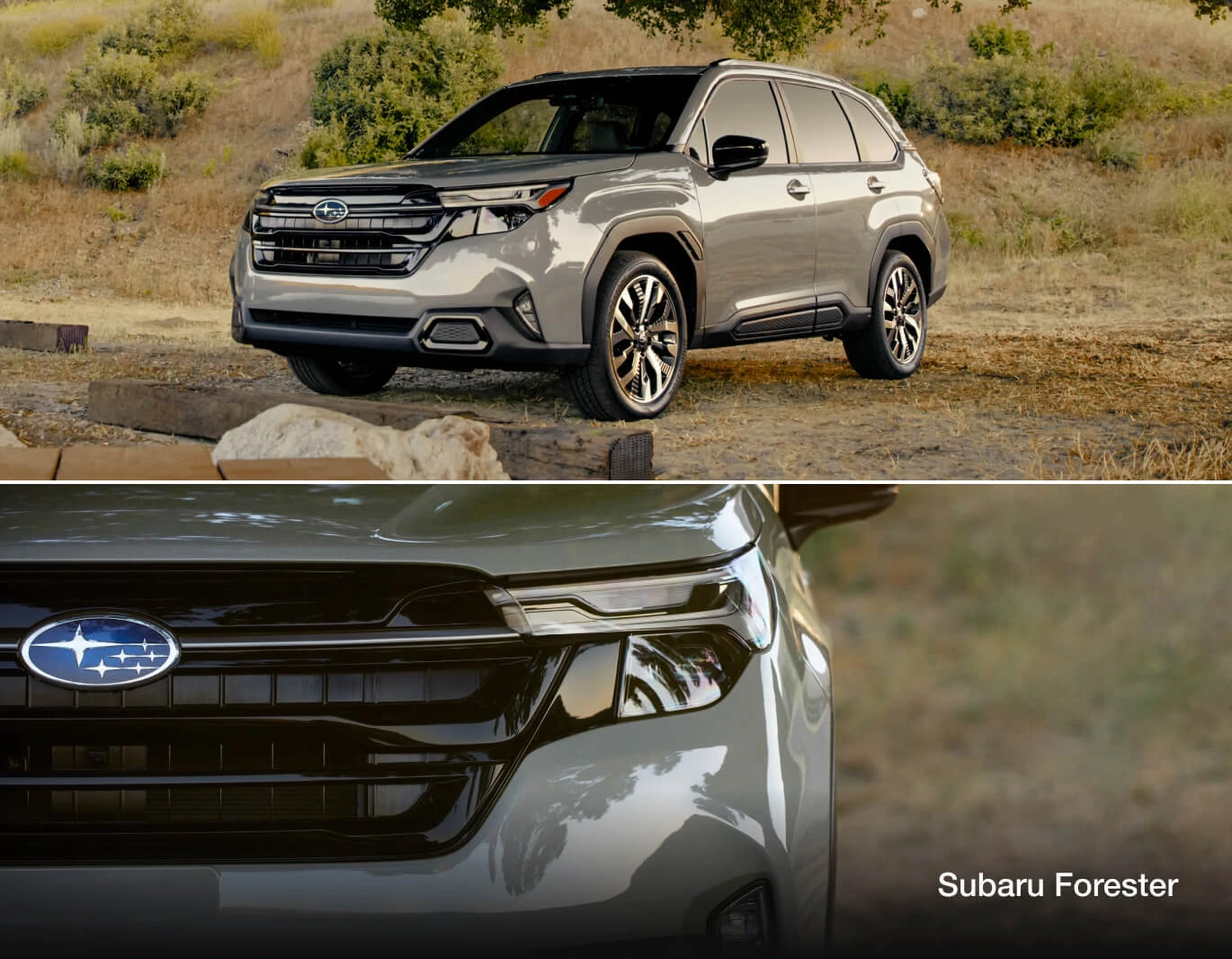
Shopping through the crowded compact SUV segment can seem daunting, so allow us to help you kickstart your search with a Subaru Forester vs. Toyota RAV4 comparison. Both of these vehicles are longstanding nameplates in their class, each offering various trims, plenty of amenities, and unique styling. At first glance, it can be difficult to tell which is the superior choice. With that in mind, our team at Quantrell Auto Group put together this guide to highlight the intricacies, such as off-roading prowess and overall space, that make the 2026 Subaru Forester a cut above the competition.
Toyota RAV4 vs. Subaru Forester Comparison Chart
| 2026 Subaru Forester | 2026 Toyota RAV4 | |
|---|---|---|
| Engine |
|
2.5L 4-cyl |
| Horsepower |
|
236 |
| Torque |
|
Not Specified |
| Drivetrain | Symmetrical AWD | FWD or AWD |
| Transmission |
|
eCVT |
| Max. EPA-Est. MPG (Cty / Hwy / Comb) w/ AWD |
|
46 / 39 / 422 |
| Max. Towing | 3,500 lbs3 | 3,500 lbs4 |
| Trims | 11 | 6 |
2026 Subaru Forester vs. Toyota RAV4 Specs
When it comes to specs, both the new Subaru Forester and Toyota RAV4 have their strengths. Though we'll give the Toyota SUV credit where it's due, we ultimately think the Subaru sport-ute delivers the more balanced performance packages – especially for motorists who even have an iota of an outdoorsy nature to them.
The Subaru Forester specs sheet reveals two powertrain options: a 2.5-liter SUBARU BOXER four-cylinder gas engine and a 2.5-liter SUBARU BOXER four-cylinder hybrid setup. The former powers the SUV with 180 horsepower and 178 pound-feet of torque, while the latter ups your horsepower to 194 thanks to its motor.
You'll find impressive Subaru Forester MPG figures for either, especially considering the model comes standard with the brand's famed Symmetrical All-Wheel-Drive system. Gas models earn up to an EPA-estimated 26/33/29 MPG (City/Highway/Combined),1 while hybrid variants achieve an EPA maximum of 35/34/35 MPG (City/Highway/Combined).1
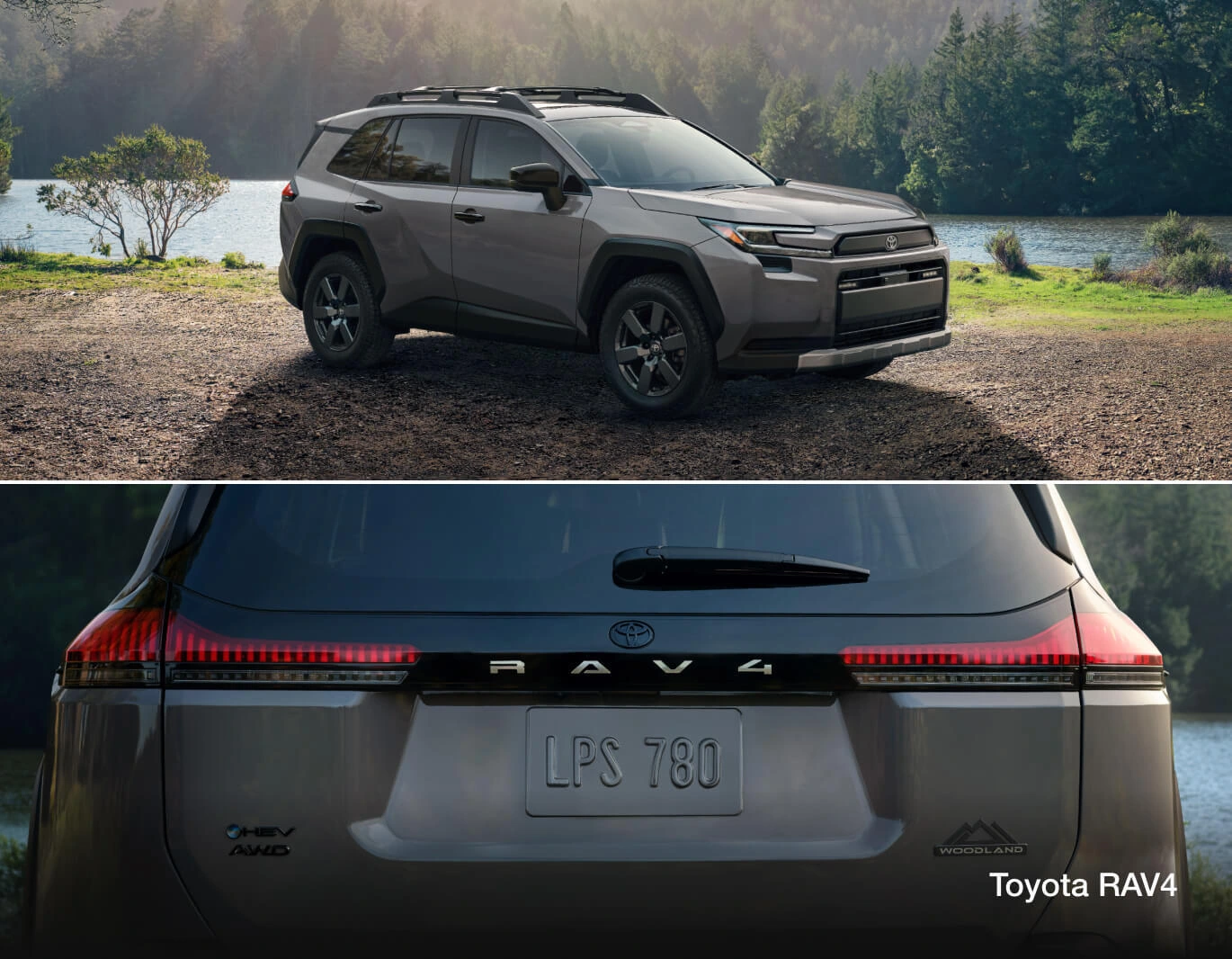
When comparing the Subaru Forester with the fully redesigned 2026 Toyota RAV4 specs, it might first seem like the RAV4 has the edge. The updated RAV4 delivers increased horsepower while earning higher overall MPG ratings, along with refreshed styling and technology. However, while the Toyota RAV4 AWD system is available on every trim in the lineup, front-wheel drive comes standard on earlier models. As we mentioned above, Subaru Forester AWD comes standard, giving it a significant advantage in terms of all-weather traction and performance no matter which trim level or powertrain you choose.
We have to hand it to Toyota – even when looking at only all-wheel-drive models, the Toyota RAV4 MPG values are quite impressive. With power to all four wheels, the Toyota SUV can achieve up to an EPA-estimated 46/39/42 MPG (City/Highway/Combined).2 However, fuel economy is just one factor to consider when shopping for a compact SUV.
In short, while the RAV4 offers more horsepower and improved MPG, the Forester gives you the choice between gas-only and hybrid performance. It also outperforms the RAV4 in adverse weather and on challenging terrain – partly due to its standard Symmetrical All-Wheel Drive, but there are other appointments that make the Forester the more adventure-ready vehicle, as you'll see below. If you want road-gripping AWD for the RAV4, you'll have to pay extra to add it to lower-tier trims or spring for a higher version, and it still won't live up to that of the Forest AWD setup.
Toyota RAV4 vs. Subaru Forester Size
| 2026 Subaru Forester | 2026 Toyota RAV4 | |
|---|---|---|
| Length | 182.9 - 183.3 in | 181 - 182 in |
| Body Width | 72 - 72.4 in | 73 - 74 in |
| Height | 68.1 - 69.3 in | 66.5 in |
| Wheelbase | 104.9 - 105.1 in | 105.9 in |
| Ground Clearance | 8.7 - 9.3 in | 8.1 - 8.5 in |
| Seating Capacity | 5 | 5 |
| Max. Passenger Volume | 110.8 cu ft | 98.9 cu ft |
| Max. Headroom (Front / Rear) | 41.2 / 39.6 in | 37.9 / 39.5 in |
| Shoulder Room (Front / Rear) | 57.7 / 56.7 in | 57 / 56.4 in |
| Hip Room (Front / Rear) | 54.7 / 53.7 in | 55.3 / 49.6 in |
| Legroom (Front / Rear) | 43.3 / 39.4 in | 41 / 37.8 in |
| Max. Cargo Space | 74.4 cu ft | 60.5 cu ft |
Subaru Forester vs. Toyota RAV4 Off-Road Capabilities
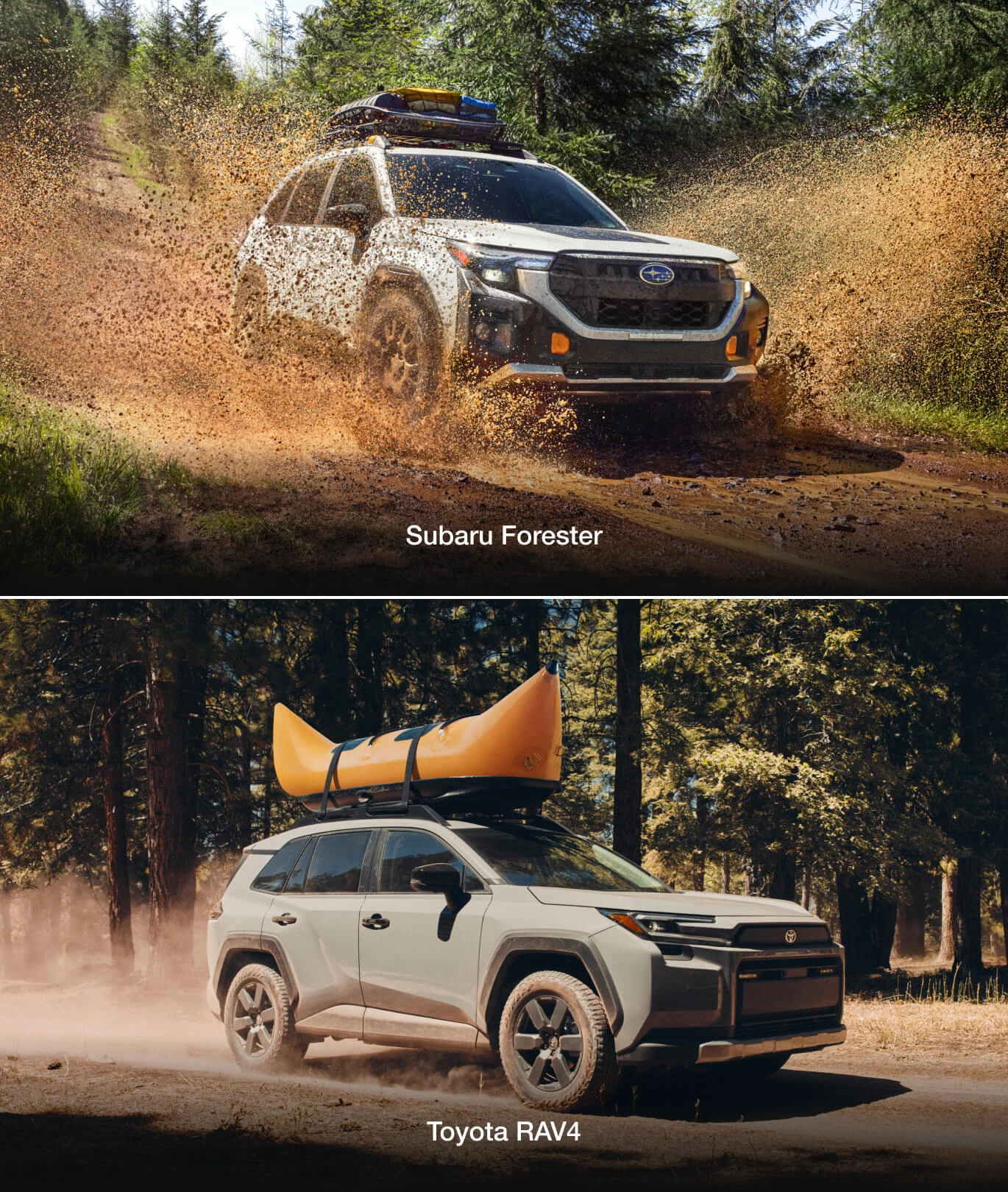
As we touched on above, if you plan to head off the beaten path, the Subaru Forester is the mode for you. While select trims of some Toyota vehicles cater to exploration, the Subaru brand is synonymous with off-roading. With models like the Forester, every iteration is built for challenging drivers – the Wilderness variant just takes that to even greater heights. Don't just take our word for it, though. We've done the legwork to showcase our point.
A major strike against the 2026 Toyota RAV4 in the off-roading category is the lack of ground clearance. While the new RAV4 may look rugged, it now lacks the specific take-charge enhancements you find on the Subaru Forester. As for Toyota RAV4 ground clearance, you'll find 8.5 inches of ride height on the outdoorsy Woodland trim and 8.1 inches on the others. You'll also find standard drive modes like TRAIL and SNOW, available all-wheel drive across the lineup, and a Multi-Terrain Monitor system (only on the Woodland trim) in terms of Toyota RAV4 off-road features.
The Subaru Forester off-road prowess begins with standard equipment, such as Symmetrical All-Wheel Drive and steering-responsive headlights. Available Dual-Function X-MODE joins the lineup on the second tier with drive settings for Dirt/Snow and Deep Snow/Mud. Additionally, add-ons, like a Thule awning, cargo carrier, and roof-top tent, can help you prep your Subaru Forester for overlanding trips. Finally, Subaru Forester ground clearance comes in at 8.7 inches for most models, beating out even the RAV4 Woodland trim.
When you step up to the 2026 Subaru Forester Wilderness edition, your ride height rises to 9.3 inches, giving it a significant advantage over any RAV4. It also has a maximum towing capacity of 3,500 pounds,3 all-terrain tires, a front skid plate, and an off-road suspension – there's really no contest when it comes to which SUV is the better off-roader!
Subaru Forester vs. Toyota RAV4 Interior & Features
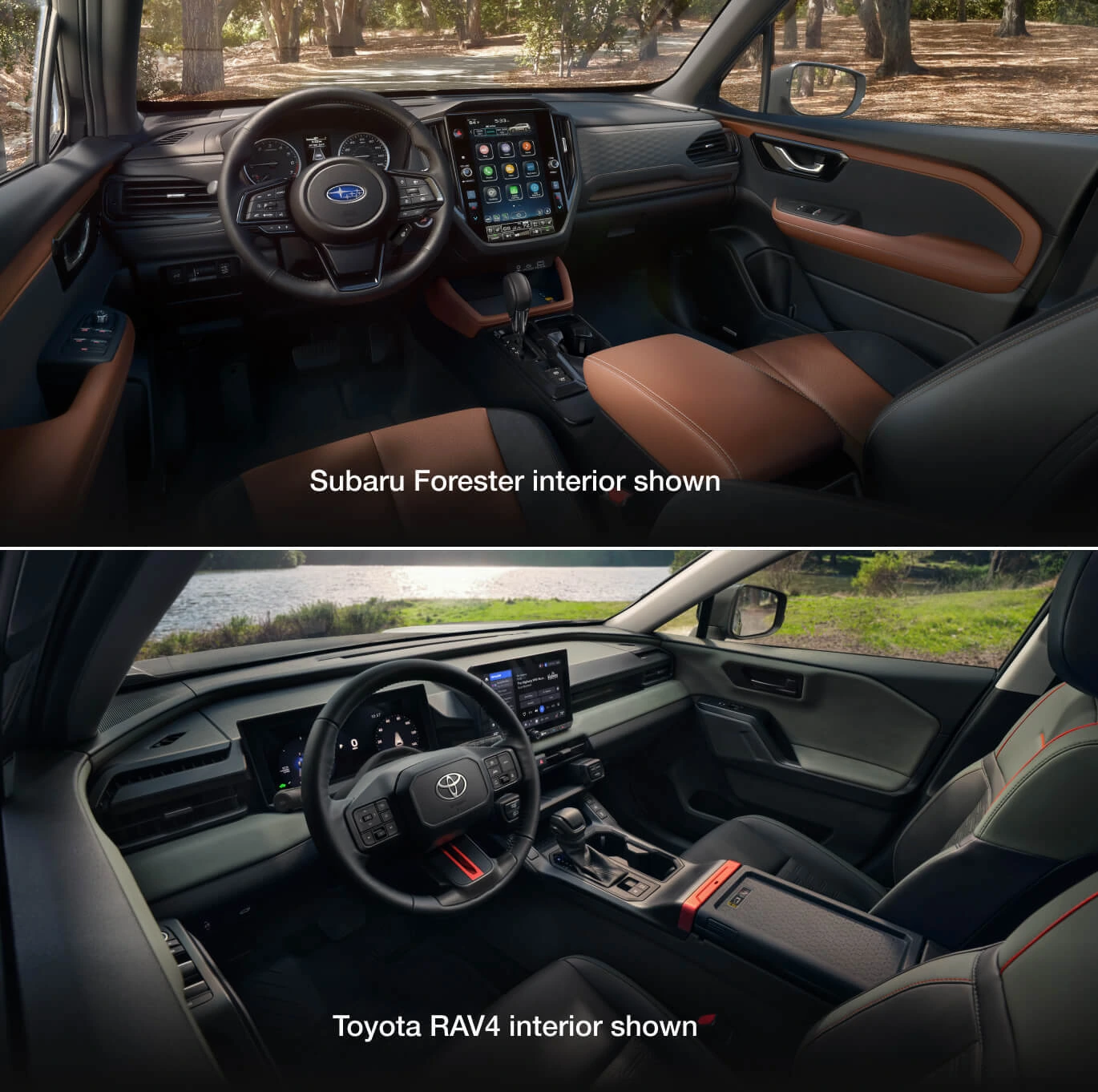
Let's turn our attention to a Toyota RAV4 interior vs. Subaru Forester interior review. As you can see in the dimensions chart above, the Subaru Forester gives occupants more space in nearly every seating position, with the one exception being slightly less front-row hip room. It has a maximum passenger volume of 110.8 cubic feet compared to just 98.9 cubic feet in the RAV4 – that's nearly 12 extra cubic feet of space for you and your crew to relax in.
Forester SUVs also give you significantly more cargo space to load up on camping equipment or other outdoor gear. With the second row folded down, you'll have up to 74.4 cubic feet of cargo room, whereas the RAV4 has just 60.5 cubic feet. This is all with similar exterior measurements, mind you, so you won't have to sacrifice maneuverability to get all this extra interior room.
The Forester also has standard features like dual-zone automatic climate control and Advanced Adaptive Cruise Control, as well as other creature comforts and technologies. As you climb the trim ladder, you'll unlock built-in navigation and heated front and rear seats, among other premium amenities.
The RAV4 comes standard with dual-zone automatic climate control, hard black plastic trim, and cloth seating. As you ascend the trims, you'll also find upgraded appointments like a larger touchscreen and heated front and rear seats, making the features showdown comparable. You just won't have nearly as much space to enjoy your rides in the cabin of a RAV4.
Subaru Forester vs. Toyota RAV4 Safety & Reliability
Both the Subaru Forester and Toyota RAV4 SUVs have had high safety ratings from various agencies in previous model years. That being said, their 2026 iterations haven't been rated by many of those same organizations yet (at the time of writing in March 2026). We do know that the IIHS has already awarded top marks for the Subaru Forester safety rating, giving the 2026 model a Top Safety Pick+ designation.5 It's not yet rated by the NHTSA for 2026. Meanwhile, the IIHS and NHTSA Toyota RAV4 safety rating results are still pending.
As for reliability, J.D. Power Consumer Ratings are a great place to check. The Subaru Forester reliability score comes in at 81 out of 100 for 2026,6 while the Toyota RAV4 reliability is yet to be rated.
All in all, both vehicles have a history of being favored for their safety and reliability, but we don't have enough information about the 2026 Toyota RAV4 quite yet to determine whether it carries over that legacy.
Learn More About the New Subaru Forester at Quantrell Auto Group
If the Subaru Forester sounds like the right vehicle for you, contact us for more information. If you're in the area, we can set you up with a test drive.
Should make the trip to our dealership, be sure to check out our new vehicle specials for the latest incentives on our inventory.
We even offer Subaru financing so you can drive home in your new Forester as soon as possible! We look forward to serving you.
Learn More About The Subaru Forester
1EPA fuel economy estimates. Actual mileage will vary with driving conditions and your vehicle's condition.
2Use for comparison purposes only. Your mileage will vary for many reasons, including your vehicle's condition and how/where you drive. See www.fueleconomy.gov.
3Maximum towing capacity varies by trim level. Trailer brakes may be needed. See your retailer for details.
4Before towing, confirm your vehicle and trailer are compatible, hooked up and loaded properly and that you have any necessary additional equipment. Do not exceed any Weight Ratings and follow all instructions in your Owner's Manual. The maximum you can tow depends on base curb weight plus the total weight of any cargo, occupants, and added vehicle equipment. "Added vehicle equipment" includes additional standard/optional equipment and accessories added by the manufacturer, dealers, and/or vehicle owners. The only way to be certain of your vehicle's exact curb weight is to weigh your vehicle without passengers or cargo. (Calculated with the new SAE J2807 method.) Installation of a tow hitch receiver or other accessories located near the rear bumper or side-door kick sensors may require disabling or removing the kick sensor, and the sensor operation setting in your vehicle should be turned off. See Owner's Manual for limitations.
5Reference to this third-party claim is solely for informational purposes and not to be relied upon. For details regarding this award, visit https://www.iihs.org
6Reference to this third-party claim is solely for informational purposes and not to be relied upon. For details regarding this rating, visit https://www.jdpower.com/cars/